
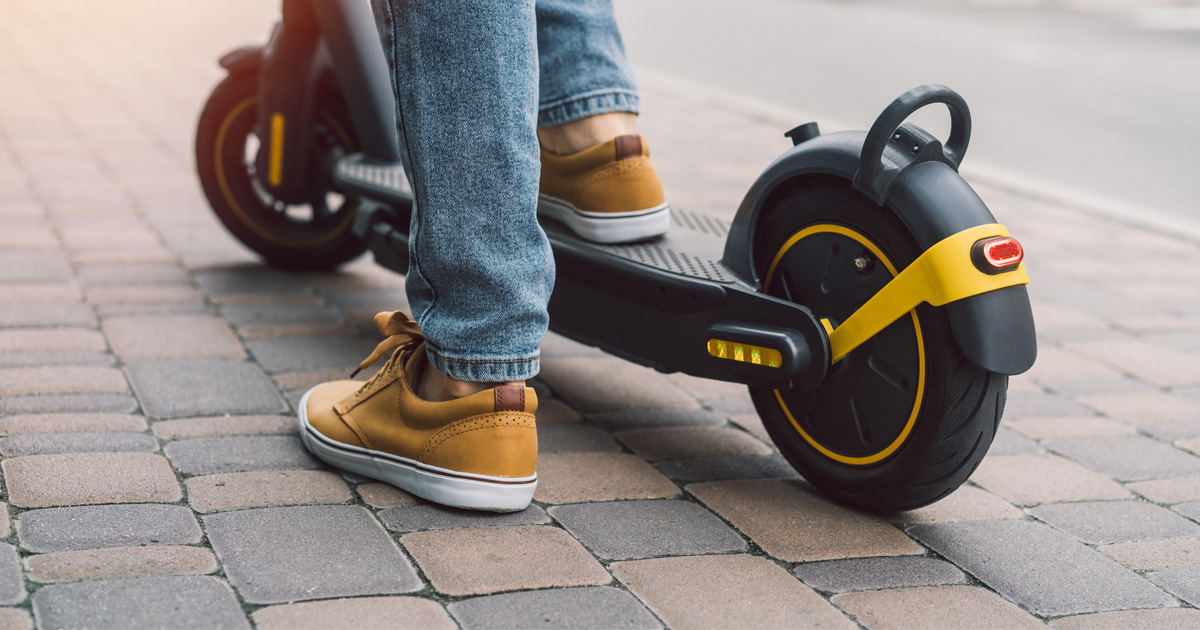
In Ireland, the laws governing e-bikes, e-scooters, and e-mopeds changed significantly on May 20, 2024, under the Road Traffic and Roads Act 2023. The key difference lies in whether the vehicle is classified as a Powered Personal Transporter (PPT) (e-bicycle and e-scooters) or a Mechanically Propelled Vehicle (MPV). (E-mopeds)
As of 20 May 2024, the Road Traffic and Roads Act 2023 governs the use of all e-scooters and e-bikes in Ireland, legalising their presence on Irish roads. It introduced a new vehicle category called Powered Personal Transporters (PPTs). These e-bikes and e-scooters are exempt from tax, insurance, registration, and licensing requirements, identical to standard push bikes and scooters. For an e-scooter to be considered a PPT, it must adhere to the strict technical specifications outlined below. However, if an e-scooter can operate at speeds and power above the legal limits, it will fall into a different category and will be considered an E-moped (PPV), which will then require a licence, registration tax, and insurance. Understanding the rules is vital, as non-compliance can impact your liability in the event of an accident. Below are the specifications for each vehicle type and the categories they fit into.
Below are the specifications for each vehicle type and the categories they fit into.
In Ireland, compensation for personal injury varies depending on the specific injury or injuries sustained, including how the injury affects your ability to work and earn an income, such as in cases involving e-scooter or e-bike accidents. Compensation is designed to cover both “General Damages” (pain, suffering, and loss of quality of life) and “Special Damages” (financial losses like medical bills, specialist equipment, and loss of earnings). t.
Since May 2024, under the Road Traffic (Electric Scooters) Regulations 2024, it is illegal to ride e-scooters on footpaths in Ireland. However, even if you were injured by a rider in a pedestrian zone, you are unlikely have a case for a personal injury claim as the E-scooter is not insured and the MIBI do not cover compensation for accidents caused by PPTs.
In cases involving uninsured or unidentified drivers (hit-and-runs), claims in Ireland are processed through the Motor Insurers’ Bureau of Ireland (MIBI). The MIBI Agreement outlines compensation procedures for personal injury claims arising from road traffic accidents involving unidentified or uninsured vehicles. If you’ve been involved in an e-scooter road traffic accident with a car and the (car) driver responsible doesn’t hold a valid insurance policy or you are unable to trace the driver, you are still permitted to bring a claim for compensation.
Instead of bringing your claim against the negligent driver’s insurance company, you will bring it against the Motor Insurers Bureau of Ireland (MIBI). Your solicitor guide you through this specific legal process. However, if the e-scooter driver is at fault, the MIBI DOES NOT cover compensation as the e-scooter is not insured.
It’s important to note that the MIBI does not cover compensation if an E-bike or E-scooter (PPT) driver is at fault for an accident, as they are not considered “mechanically controlled vehicles” under the Road Traffic Offences Act 1961.
As E-scooters/PPTs are exempt from insurance, they do not fall under the MIBI’s normal remit, so the MIBI does not cover injury claim compensation if the injury was caused by the PPT driver (e-bike or e-scooter). If you are hit by an e-scooter, there is often no “insurer of last resort.” However, you may be entitled to pursue the individual rider for damages personally.
In effect, this means that parties who suffer injury in a crash with a PPT may not be able to claim compensation for any injuries sustained in the accident, as they are not covered by insurance or MIBI.
If an accident occurred involving a PPT or MPV, and the driver of an uninsured or unidentifiable car, van or truck was at fault and caused injury to the PPT / MPV driver, they can be compensated for their injuries by the insurance company of the party at fault or MIBI if the vehicle at fault is not insured.
As E-mopeds are classified as MPVs (i.e., throttle-assisted bikes or those capable of speeds over 25 km/h), they do require tax and insurance, and in some models, licensing is required (specifically L1e-B categories). Therefore, the MIBI typically will deal with crashes involving E-mopeds at fault if the driver is uninsured or untraced (hit-and-run). However, to make a claim against the MIBI for an e-moped crash, the vehicle generally needs to be identifiable, such as by a registration plate, which e-mopeds are required to have.
“Only L1e-B e-mopeds, and not low-powered electric bikes, are required to be insured under the Road Traffic Acts and only this category falls under the remit of the Motor Insurers’ Bureau of Ireland (MIBI), which compensates victims of road traffic accidents caused by uninsured and unidentified vehicles.” https://www.oireachtas.ie/en/debates/question/2024
A recent District Court decision has classified a certain e-bike as a Mechanically Propelled Vehicle (MPV), which highlights important implications for users and injury victims. In the case where a pedestrian was hurt by an e-bike capable of reaching 25 km/h was also equipped with a 750W motor, so the court ruled that the rider must have valid insurance. This sets a new precedent, allowing injured parties from uninsured e-bikes that surpass the Personal Powered Transporter (PPT) limits to potentially seek compensation through the Motor Insurers’ Bureau of Ireland (MIBI). Although the decision did not specifically mention e-scooters, it highlights the importance for all micro-mobility users to check their vehicle’s details, as exceeding PPT standards could lead to legal and insurance requirements. (Law Society Gazette 2025 -E-bike ruling ‘highlights need for clarity’)
Generally, you have two years from the date of the accident to initiate a personal injury claim. If the two-year period has expired, even by one day, your claim is Statute Barred from proceeding. It can take time to issue legal proceedings, so you should not leave it until the last few weeks before the expiry of the statute to instruct your solicitor.
It is always best to seek legal advice as soon as possible to ensure evidence is preserved. For children injured in an accident, the statute of limitations is different because long-term injuries may not become apparent until they are older. A parent or guardian can start the injury claim for the child within 2 years of their 18th birthday, instead of the typical 2 years from when they became aware of the injury. While it’s not advisable to wait this long, legal action can be initiated up to the child’s 20th birthday if the injury occurred during infancy.
Electric scooters, now a common sight on our tertiary roads and cycle lanes, offer a green and efficient alternative to traditional transport for short journeys. However, as their presence on our roads has surged, so has the rate of accidents such as collisions with cars and bikes.
Because e-scooters offer minimal physical protection, injuries are often significant.
Car Door Accidents: These occur when a parked motorist opens a door into the path of an oncoming e-scooter. A helmet will provide only limited protection for the e-scooter driver, but head injuries can still occur when hit by a car door.
Pedestrian Collisions: Often involving soft tissue injuries when a pedestrian is struck by an e-scooter on a footpath or at a junction.
Rear-end & Side Impacts: Collisions caused by cars, buses, or HGVs failing to see the e-scooter rider.
Roundabout & Junction Incidents: Where vulnerable road users are often clipped by turning vehicles.
Because e-scooters offer minimal physical protection, injuries are often significant.
Car Door Accidents: These occur when a parked motorist opens a door into the path of an oncoming e-scooter. A helmet will provide only limited protection for the e-scooter driver, but head injuries can still occur when hit by a car door.
Pedestrian Collisions: Often involving soft tissue injuries when a pedestrian is struck by an e-scooter on a footpath or at a junction.
Rear-end & Side Impacts: Collisions caused by cars, buses, or HGVs failing to see the e-scooter rider.
Roundabout & Junction Incidents: Where vulnerable road users are often clipped by turning vehicles.
If you are involved in a collision, your actions in the immediate aftermath are critical for your health and any future legal claim:
If you were injured in a road accident due to another party’s fault, you may be eligible for compensation. Our legal team will guide you through the claims process.
Injury claims involving accidents in public places, leisure centres, and workplaces are common. We will assist you in determining who is legally responsible and secure the compensation you deserve.
Common workplace accidents arise from heavy lifting, carrying, slipping, tripping, falling objects, tools, machinery or repetitive tasks. Employers have a duty to provide a safe work environment. If your injuries were caused in work you may be eligible to seek compensation.
The content in this post is information only.
If you’ve suffered a personal injury through no fault of your own, the path to fair compensation can be daunting. Our experienced solicitors have successfully represented clients across Ireland, offering compassionate, expert advice. Contact us confidentially any day of the week by call, email, text, or contact form, and a solicitor will respond. We’re here to help 7 days a week.
